About the dish
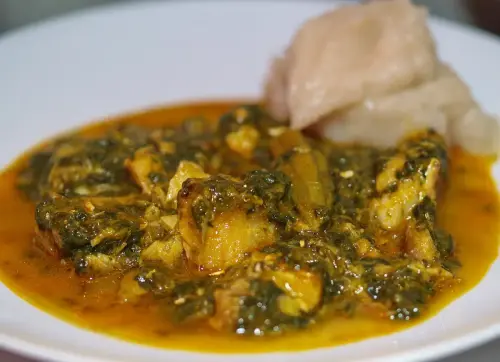
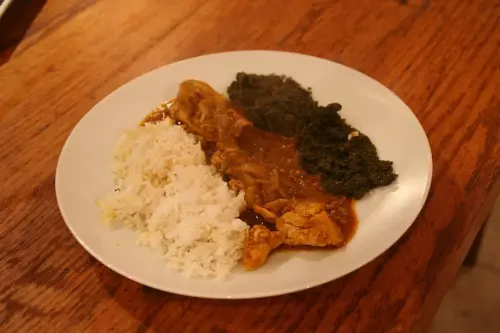
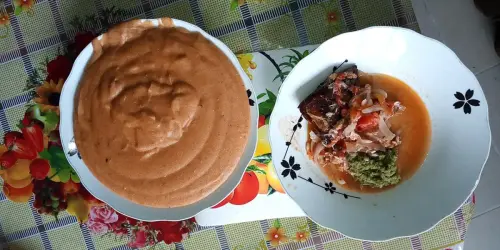
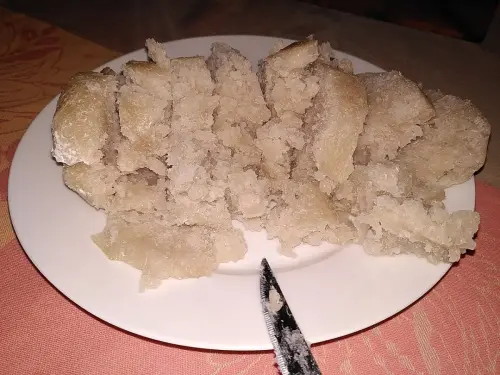
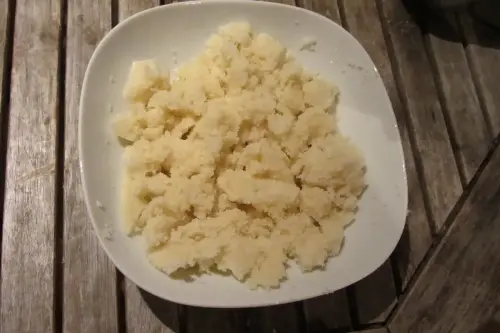
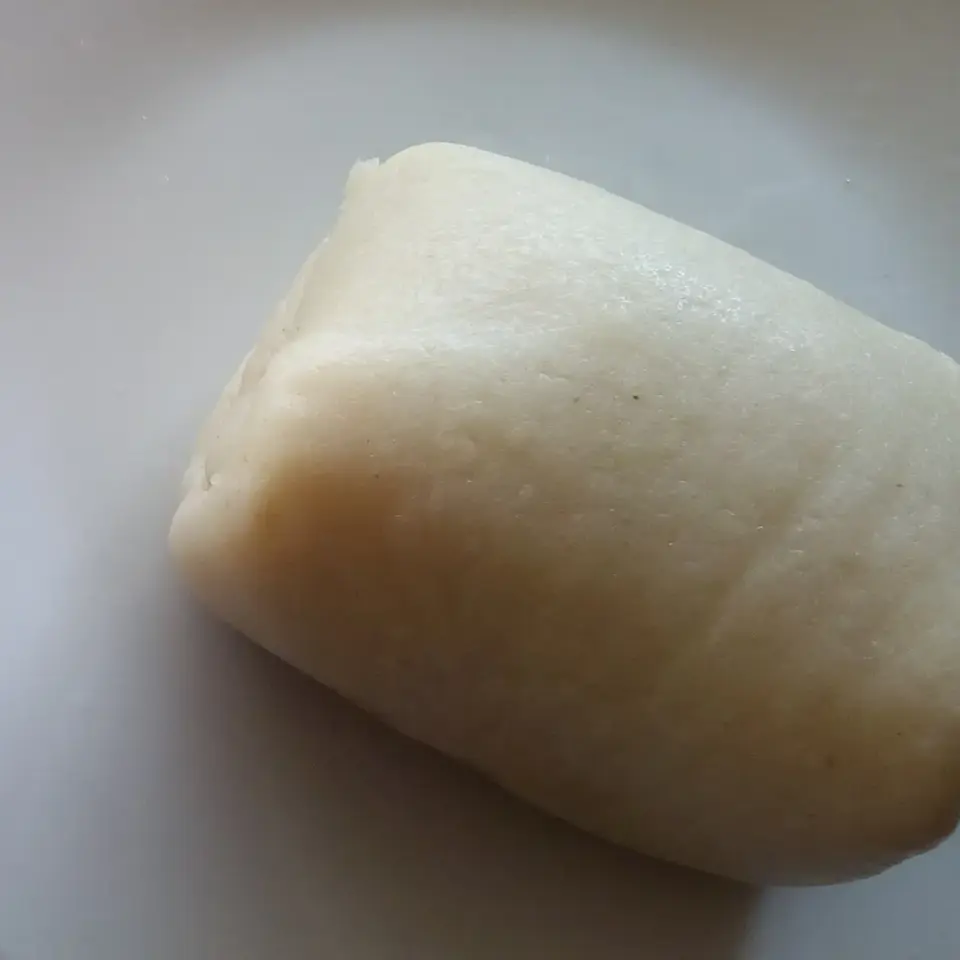
Fufu is one of the great staples of West and Central Africa – a filling accompaniment that takes the place of bread or potatoes. Boiled cassava, green plantain or yam is traditionally pounded in a big wooden mortar with a long pestle until it forms a smooth, sticky, springy ball. It is eaten with the right hand: you pull off a small piece, press a hollow into it with your fingers and scoop up soup or sauce, usually swallowing the fufu without chewing. Each country and region makes it from slightly different ingredients and under a different name. Today many homes use ready-made fufu flour.
Main ingredients
- cassava
- green plantains
- yam
- water
Angola: Called funge (funji) in Angola – a smooth porridge of cassava or maize flour, the standard partner for stews.
Benin: Called igname pilée in Benin, especially in the north and in Yoruba areas.
Cameroon: In Cameroon made from cassava or maize (fufu corn in the North West), and often simply called couscous.
Central African Republic: In the Central African Republic the firm cassava-flour porridge is called gozo.
Côte d’Ivoire: Called foutou in Côte d'Ivoire, made from plantain or yam and served with palm nut sauce (sauce graine).
DR Congo: In the DRC fufu made from cassava flour, often mixed with maize, is the lunchtime staple, especially in Kinshasa and the west.
Ghana: In Ghana pounded from cassava and plantain and served with light soup, groundnut soup or palm nut soup.
Nigeria: In Nigeria fufu (akpu) is made from fermented cassava; pounded yam, iyan in Yoruba, is just as popular.
Republic of the Congo: Called foufou in Congo-Brazzaville, made from cassava flour and served with saka-saka and sauces.
Togo: In Togo foufou is made from yam, pounded in a large mortar and eaten with hot sauces.
More: Wikipedia (en)