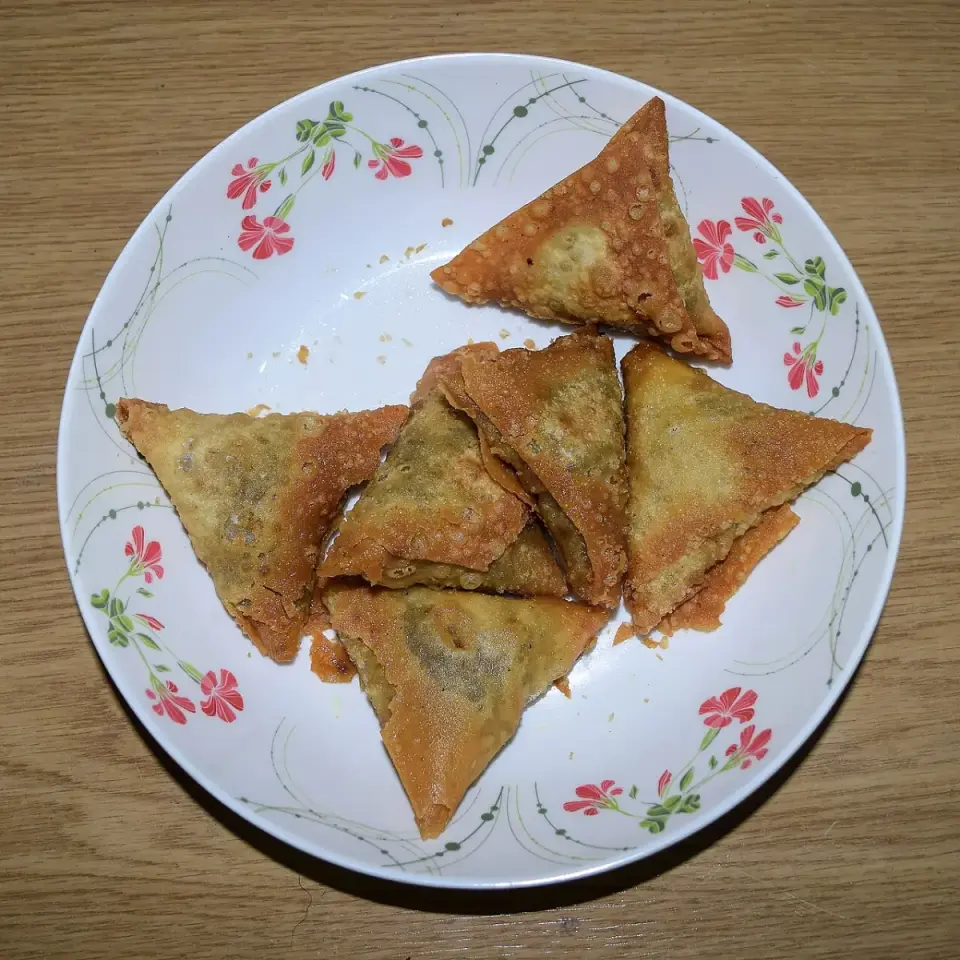
About the dish
Samosa is one of South Asia’s favourite snacks – a triangular pastry with a short, crumbly crust, fried slowly in deep oil until golden and covered in tiny blisters. In India it is most often filled with potatoes and peas, ginger, chilli, cumin and amchur, dried mango powder, while in Pakistan and many Muslim households minced meat is common too. It is bought hot from street stalls, railway stations and tea shops, with mint and coriander chutney or sweet-sour tamarind chutney, often alongside a glass of masala chai. Similar pastries are eaten in East Africa and the Middle East.
Main ingredients
- wheat flour
- potatoes
- green peas
- ginger
- green chilli
- cumin
- amchur
Djibouti: Called sambusa in Djibouti, a popular snack especially during Ramadan.
Eritrea: Called sambusa in Eritrea, often with a lentil filling.
Ethiopia: Called sambusa (ሳምቡሳ) in Ethiopia, usually filled with lentils or meat and popular during Ramadan and holidays.
Kenya: Called samosa in Kenya, usually filled with minced beef, a popular teatime snack, especially on the coast and during Ramadan.
Madagascar: Called sambos in Madagascar, a favourite snack from street stalls.
Mauritius: Called samoussa in Mauritius, a popular street snack.
Mozambique: Called chamuças in Mozambique, usually filled with meat or prawns.
Pakistan: In Pakistan: سموسہ; a fixture of the Ramadan iftar, often filled with minced meat.
Somalia: Called sambuus in Somali, a fixture of the Ramadan iftar.
Tanzania: Called sambusa in Tanzania, filled with meat or vegetables, common especially in Zanzibar and during Ramadan.
Uganda: Called samosa in Uganda, often filled with meat, peas or beans, sold on the street and with tea.
More: Wikipedia (pl) Wikipedia (en)