About the dish
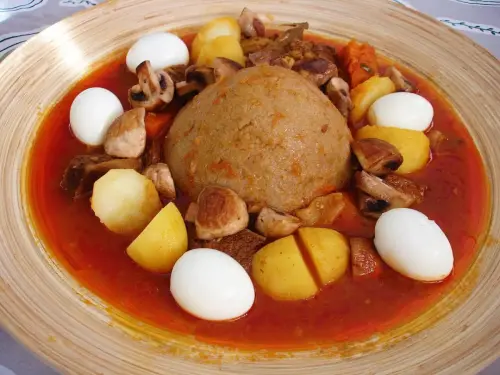
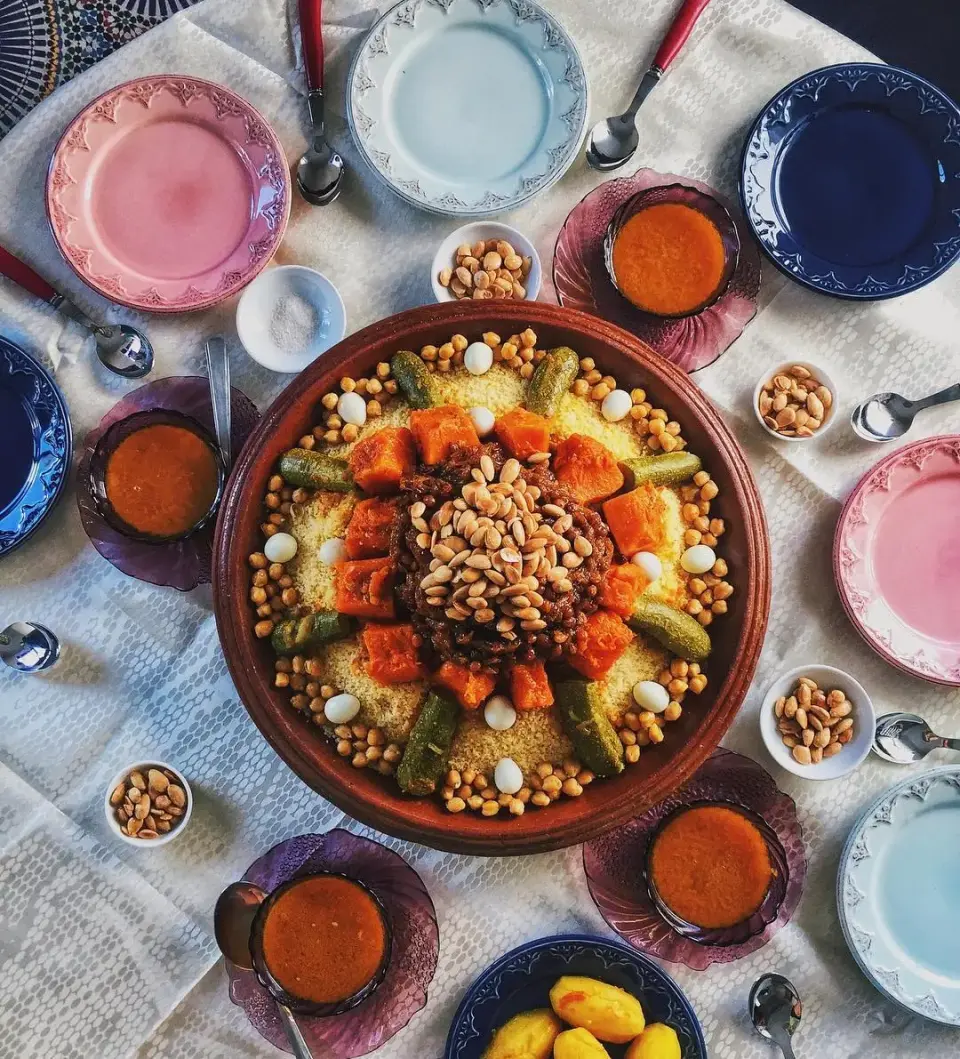
Couscous is made of tiny grains of semolina that are steamed several times in a special pot – a couscoussier – above a broth of meat and vegetables. It is served on a large platter, with the meat and vegetables on top and the broth in a separate bowl. Every country and region of the Maghreb has its own versions: Moroccan with seven vegetables and sweet onions with raisins, Algerian with a white sauce, spicy Tunisian with fish. It is a dish for Fridays, holidays and weddings. In 2020 the knowledge and practices around couscous were jointly inscribed by Algeria, Mauritania, Morocco and Tunisia on the UNESCO intangible heritage list.
Main ingredients
- couscous
- lamb or chicken
- chickpeas
- carrots
- courgette
- turnip
- pumpkin
Other versions: Couscous with vegetables only is common, and in Tunisia it is also made with fish.
The “vegetarian” and “vegan” labels refer to the recipe shown, not to every version of the dish.
Algeria: In Algeria served with a white or red sauce, with lamb or chicken; also called taam.
Libya: Called kuskusi in Libya, usually with lamb, chickpeas and potatoes.
Morocco: A traditional Friday dish in Morocco, often with seven vegetables; called seksu in Berber.
Tunisia: In Tunisia usually spicy with harissa, often with fish or lamb.
We show dishes associated with a country, not official national dishes; “national dish” and “culinary symbol” are used only with a basis. What do the labels mean?
More: Wikipedia (pl) Wikipedia (en)